
Model Railroading as a System-Based Hobby in the Age of Online Gaming
In this day and age of video games, why is model railroading still a system-based hobby? Model railroading is one of those hobbies that seems easy at first glance (little trains going on little tracks), but it has a lot of hidden depths once you start to look into it. People who have played strategy games or used online platforms before will find this hobby surprisingly similar. It's based on planning, systems, and slowly getting better. Whether you're new to the sport or just interested in it, learning what it's all about will change the way you see it.
Model railroading often fulfills the same need in people who like multi-layered fun, such as board games and online strategy games like royalstiger casino, where choices add up over time. People are drawn to both worlds because they both give them a sense of joy when they are in charge of processes, make decisions that affect others, and see something complicated come together.
What is model railroading, and how is it like playing video games online?
Model railroading is the hobby of making and running scale copies of real railroad systems. As a hobby, people make track plans, scenery, and electricity systems. Then, they run trains by rules that are either true or made up just for them. The builder's likes, hobbies, and skills are shown in the working miniature world that is the result. It's more hands-on than most computer hobbies, but it has a lot of the same mental benefits.
There are real structural parallels to strategy games that should be looked into. Both require managing resources, planning in steps, and making improvements over and over again. Any strategy gamer would know the type of thinking that goes into a model railroader picking where to put a yard and how to wire its switches. No digital sources are used here; the reasoning is still the same.
What Model Railroading Is Really Like Every Day
A lot of people think that the sport is just running trains in a circle, but the truth is much more complex. A modeler could be laying track, studying a prototype train, painting a structure, fixing a wiring problem, or looking at forums for ideas on how to make scenery at any given time. Different kinds keep it interesting. You almost never do the same thing twice, and every problem you solve makes the plan look or work a little better.
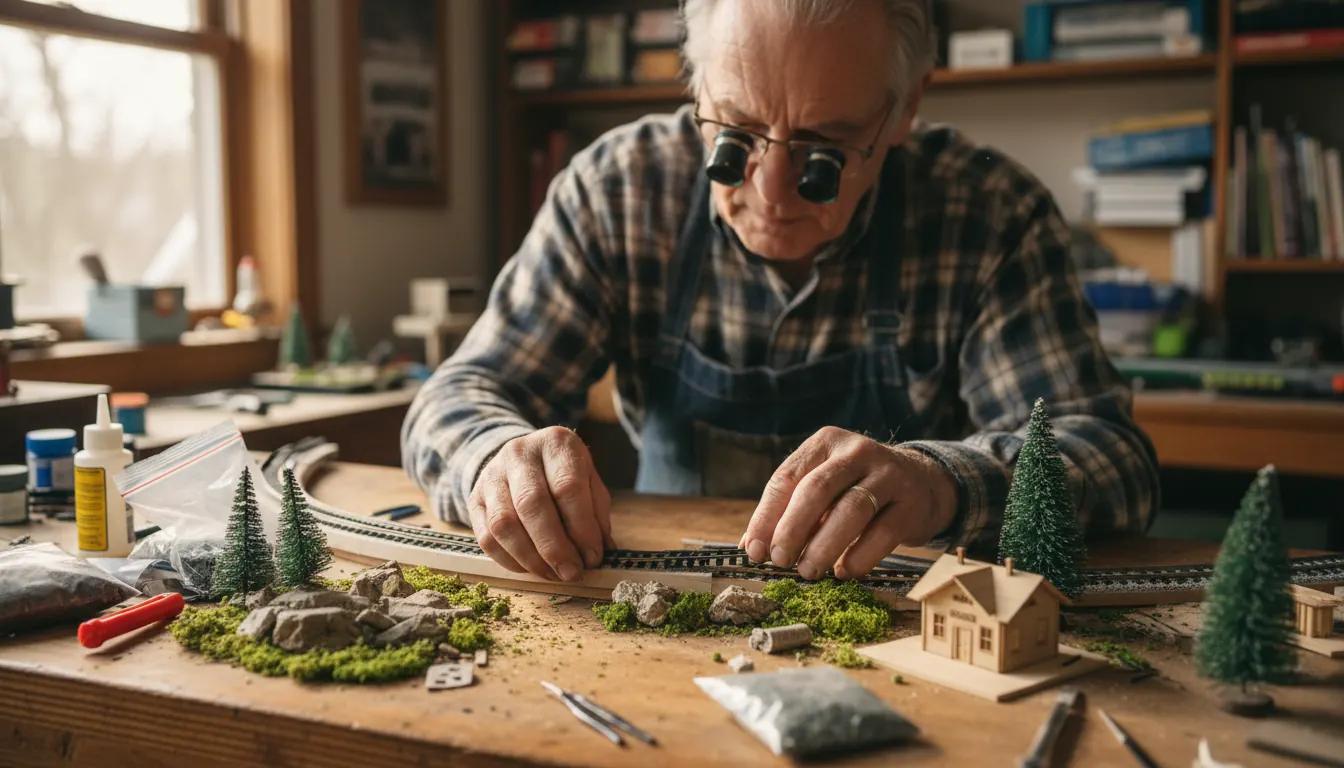
Similar Ways of Thinking Between Train Fans and Online Gamers
It's amazing how well the mental habits that make someone good at strategic internet games work for model railroading:
- Long-term planning based on many choices that are linked to each other
- Managing the budget and setting priorities when resources are limited
- Pattern recognition can help you figure out what's wrong or make systems work better
- Being good at research means knowing where to look and what questions to ask
- Willingness to rethink, tweak, and get better over time
- Paying attention to details in settings with many layers and complexity
- Comfortable with slow growth instead of quick awards
These similarities are not by chance. They both have the same type of mind, which is one that gets a lot of pleasure from building and running long-term processes.
Model railroading for beginners: How to Start Today
Getting started in model railroading is easier than ever these days. The knowledge gap is almost nonexistent thanks to hobby groups, online stores, YouTube tutorials, and company websites. Anyone looking for their first launch kit at midnight can get more help than a determined hobbyist could get any other way thirty years ago. It's not hard to find information; it's picking out the right information and taking it in the right order.
A beginner set from a well-known brand is often the best place to start. There is a train, a few cars, an oval of track, and a basic power source in these sets. Because they're made to work well right out of the box, your first lesson can be all about enjoying running trains instead of fixing problems. After that base, everything else just falls into place.
What a Beginner's First Year Might Be Like
In model railroading, the first year usually goes in a clear direction. You should know this before you start, so when things get tough, it won't be so depressing.
| Phase | Average Length of Time | Main Focus | Common Problems |
|---|---|---|---|
| Discovery | 1 to 4 weeks | Looking into sizes, names, and themes | Too much information |
| The first buy | Weeks 2 through 6 | Starter set | Picking through the choices |
| The first layout | Months 1 through 3 | Simple circle and simple scenery | Scope creep and impatience |
| Expansion | Months 3–9 | Adding wires, switches, and buildings | Managing the budget |
| Depth | Months 9–12 | Operations and DCC | Technical learning curve |
Setting up the Right Base Early
Do not build everything at once. This is the most helpful thing to keep in mind when beginning model railroading. In a very real sense, the sport rewards patience: a small layout that is fully built is more rewarding than a big one that is only partially built. Start with a size that you can finish. Before you add scenery, run trains on empty tracks. Before you try to speed up the sport, let it find its own pace.
"The worst thing for beginners is making plans for a layout they can't finish. Start small, finish what you're working on, and then start building again. One finished plan will teach you more than five unfinished ones."
— Russ Bellinis, long-time writer for Model Railroader magazine
How to Pick the Best Scale for Your Model Railroad Layout
Choosing the right model railroading scale is one of the first and most important decisions — it refers to the size ratio between the model and its real-life counterpart. It changes how much room you need, what goods are available, how far your budget can go, and how much information you can include. Take your time with this choice; it will affect everything that comes after.
HO (1:87), N (1:160), O (1:48), and G (1:22.5 for big outdoor use) are the sizes that are used most often. Each has its own society, ecology of products, and trade-offs that make sense in real life. HO is the most popular scale in the world, and it has the widest range of engines, rolling stock, buildings, and scenery items. N scale is a great option for people who don't have a lot of room because it can fit twice as much plan into the same space.
Important Things to Think About When Picking Out a Scale
The key to long-term happiness is to match a scale to your current situation, not your dream position. The important things to think about are:
- Available space: Before you fall in love with a scale, measure your real room
- Plan your budget: bigger scales usually cost more per item and per square foot of plan
- For precision work on smaller sizes, you need to be able to see and move your fingers more precisely
- For community and support, look at how active your local clubs are and how big your favorite online forums are
- Availability of the product: some sizes don't have many choices for locomotives or rolling stock
- Long-term goals: setting up an apartment and a fixed basement plan need very different sizes
- Personal taste: some scales look and feel better to some people than others; follow your gut
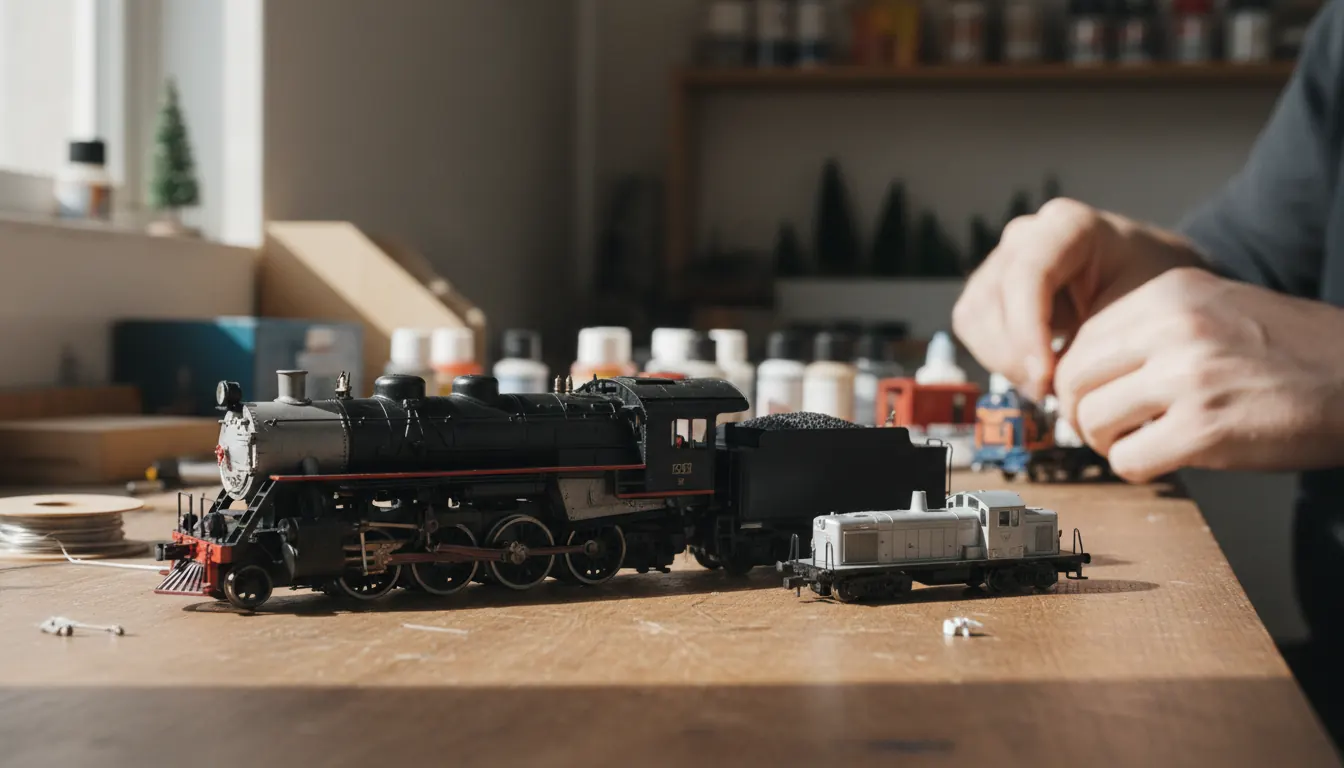
Railroading on a budget: smart planning in the world of digital entertainment
It is possible to do budget model railroading, and people who aren't into the sport often get the economics wrong. Yes, metal trains with lots of details can cost hundreds of dollars. But for a few hundred dollars spread out over a year, you can also make a plan that works well and looks good. The key is to put track, power, and efficient trains at the top of the list for core infrastructure and treat everything else as an add-on.
This way of thinking is already familiar to people who handle budgets for multiple types of entertainment, like game subscriptions, streaming services, and hobby supplies. In model railroading, too, you need to be disciplined: know how much you can spend each month, shop wisely, and avoid making impulsive purchases that take you away from your real layout plan.
| Item | Entry Level | Mid Range | Notes |
|---|---|---|---|
| Starter set | $80–$150 | $150–$300 | Power, cars, circle track, and engine |
| Additional track | $20–$50 | $60–$120 | Flex track gives you more options |
| Scenery base | $15–$40 | $50–$120 | Foam, turf, support, and static grass |
| Structures | $10–$25 each | $30–$70 each | Depends on brand and complexity |
| DCC system | $80–$130 | $150–$350 | Optional but useful in the long run |
Where to Find Value Without Giving Up Quality
Used trains from well-known names like Atlas, Kato, or Athearn often work just as well as new ones and cost a lot less. You should often check online markets, estate sales, and the clearance areas of craft shops. When experienced modelers upgrade, they often sell off their older, still-in-great-condition tools. This creates a secondary market that is very helpful for newbies on a budget.
"Your first step doesn't cost a lot of money. Choose how you spend your money. Before you buy anything, think about what you want to achieve."
— Andy Sperandeo, former director of Model Railroader
Model railroading books and online communities can help you learn how to start
Even though videos have taken over the sport, books on model railroading are still some of the most useful tools. A well-written book on building scenery or planning tracks gives you a clear, organized way to learn about a complicated subject that most YouTube videos don't offer. Classic works by authors such as John Armstrong, Dave Frary, and Tony Koester are still useful many years after they were first published. You should get these books as soon as possible.
People in online groups can give you advice in real time, help with planning, troubleshooting, and the quiet support of seeing other people's work in progress. For people who are just starting out, busy forums like Model Railroader's community, Reddit's r/modeltrains, and scale-specific Facebook groups are great places to be. People in this society are usually kind. Experienced modelers remember the questions they asked when they were new and answer them without making fun of them.
If you start model railroading today, you will be building on decades of community knowledge. That really is an advantage. People have already answered, recorded, and talked at length about the questions you're asking. You just need to know where to look, and the community will help you find it.
How does model railroading work in the end? As a project, you work slowly and carefully to make something real: a system that you plan, build, and use over months and years. No matter what brought you to the hobby in the first place — an interest in trains, a love of tiny worlds, or just the desire to do something physical to balance out your screen time — it meets you where you are and awards the same kind of thinking that got you there.