
Model Railroading for Beginners and Enthusiasts
Model railroading is a hobby that combines artistic creativity with engineering accuracy. It's popular with people who like to see detailed trains and landscapes bring tiny worlds to life. This activity has been enjoyed for generations and is both relaxing and challenging. People plan tracks, maintain rolling stock, and reenact historical railway scenes. Whether you're looking for your first starter set or want to get better at more advanced techniques, knowing the basics and the tools that are out there will help you have a fun and satisfying time with this fascinating hobby.
What Is Model Railroading and Why It Matters
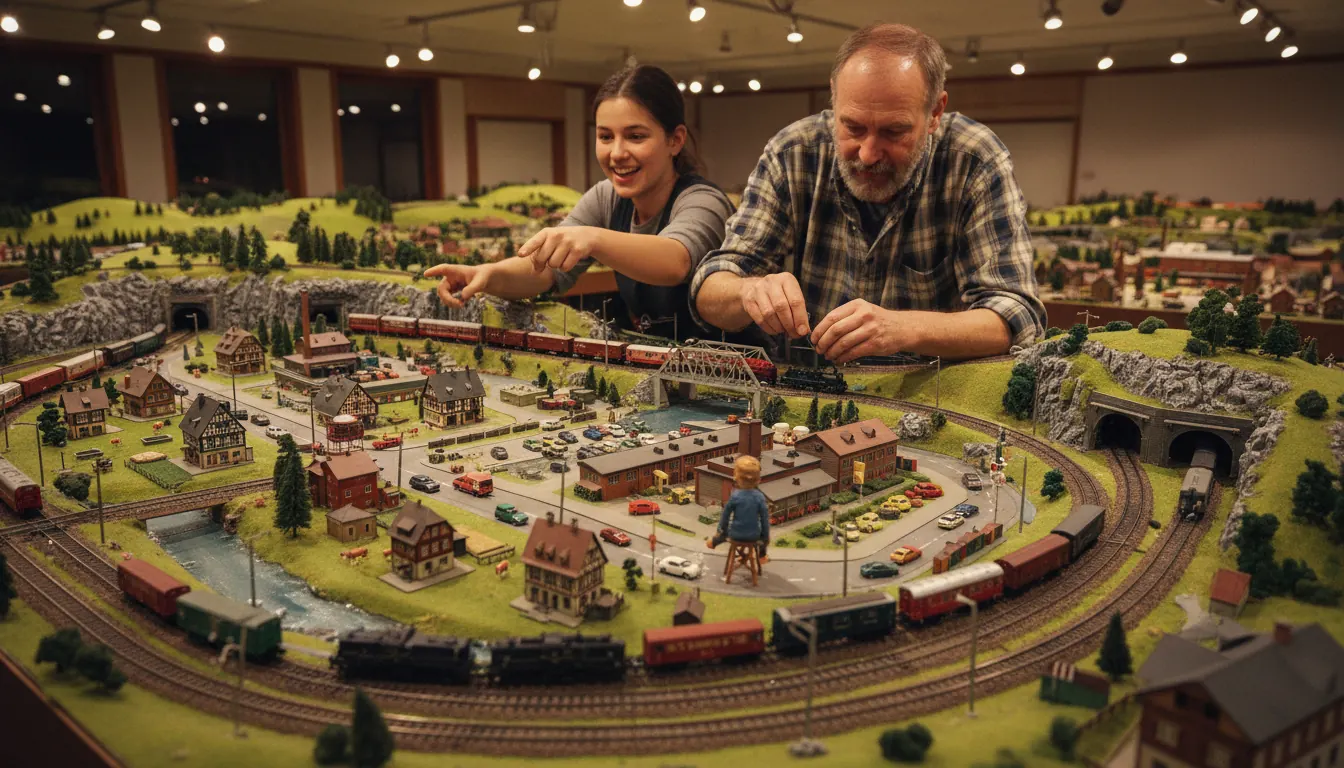
Model railroading is the hobby of making small versions of real railroad systems, complete with tracks, buildings, scenery, and trains. Fans build these tiny worlds with different levels of difficulty, from simple oval plans to huge, multi-level networks that look and work like the real world. There are different sizes for this sport, but HO scale (1:87) and N scale (1:160) are the most popular with beginners because they have the right amount of detail and room.
Model railroading is important for more reasons than just fun. It gives people a real link to transportation history and lets them enjoy and protect train history through accurate models. Many railroaders study historical photos and documents to duplicate real scenes from different times. They do this by researching specific replica railroads. The hobby can teach people about economic growth, geography, and how technology has changed over time because it involves preserving history.
Understanding the Essential Components
Almost every model train has a few basic parts that all work together to make the whole thing work. The base is the track, which comes in different codes (rail heights) and shapes, such as sectional, flexible, and hand-laid. The mobile parts are made up of rolling stock, like trains and cars. Modern models have a lot of realistic features, like directional lighting, sound effects, and smoke units that work together.
Digital Command Control (DCC) now lets multiple trains run independently on the same track, which is a huge step forward in control systems. By putting decoders inside trains, this technology changed the way things were done by letting operators precisely control speed, direction, and other functions. People who like things to be simple or who want to accurately recreate older technology times still like traditional DC systems.
Many newcomers find guidance through resources like The 7+ Railroader magazine, which offers step-by-step tutorials on everything from track wiring to scenery construction. These specialized publications fill an important need by carefully selecting articles that help readers make sense of the huge number of options available in modern model railroading.
Why People Choose This Creative Pursuit
Model railroading is a great way to use a lot of different skills and offers numerous benefits to enthusiasts:
- The hobby helps with stress release and awareness by requiring focused, hands-on attention in the present moment.
- Fans share tips and support with each other in online groups, clubs, and shows, which helps them make friends.
- Intergenerational attraction lets families work together on plans, sharing skills and making memories that will last a lifetime.
- Creative freedom lets you make any changes you want, from freelanced fictional trains to carefully studied prototype models.
- When making track plans or fixing electricity problems, problem-solving tasks make you think analytically.
- Whatever the weather or yearly restrictions are, indoor activities can be done all year long.
- Model railroading combines research, drawing, wiring, and building into one comprehensive creative outlet.
Model Railroading for Beginners Step by Step
When you first start model railroading, you have to make some important choices that will affect your experience for a long time. The first thing you need to do is pick a scale that works with your room, price, and area of interest. Larger scales, like O gauge (1:48), have more detail and are easier to handle, but they need a lot of space. Smaller scales, like Z (1:220), can fit complex plans in a small area, but they need steady hands and good lighting for assembly.
Starter sets are a cheap way to get started. They usually come with a train, a few cars, an oval of track, a power source, and some simple scenery pieces. These packages let people who are new to railroading get hands-on training right away while they learn the basics. But a lot of experienced modelers say that you should add to or skip starting sets and instead use individually chosen parts that are better for your long-term goals, even if it costs more at first.
Choosing Your First Layout Configuration
Permanent plans that are attached to benchwork are stable and let you build complex scenes, but they need a lot of room and a lot of work to build. Building modular plans in sections gives you a lot of freedom, so you can add on to them over time and maybe even take part in group shows. People who don't have a lot of room can use portable plans on folding tables, but they give up some operating complexity and scene permanence.
Track planning software lets you see how plans will look before you buy the materials. These tools take into account the necessary space, curve radii, and grade limits that make real-world operation possible. Beginners often start with easy plans that stay away from steep hills and tight turns, which can make it hard to run longer trains or older equipment.
Essential Skills Every New Modeler Needs
Developing proficiency in model railroading requires mastering several fundamental skills:
- Basic electrical wiring for track power distribution, including how to choose the right wire size and how to solder it.
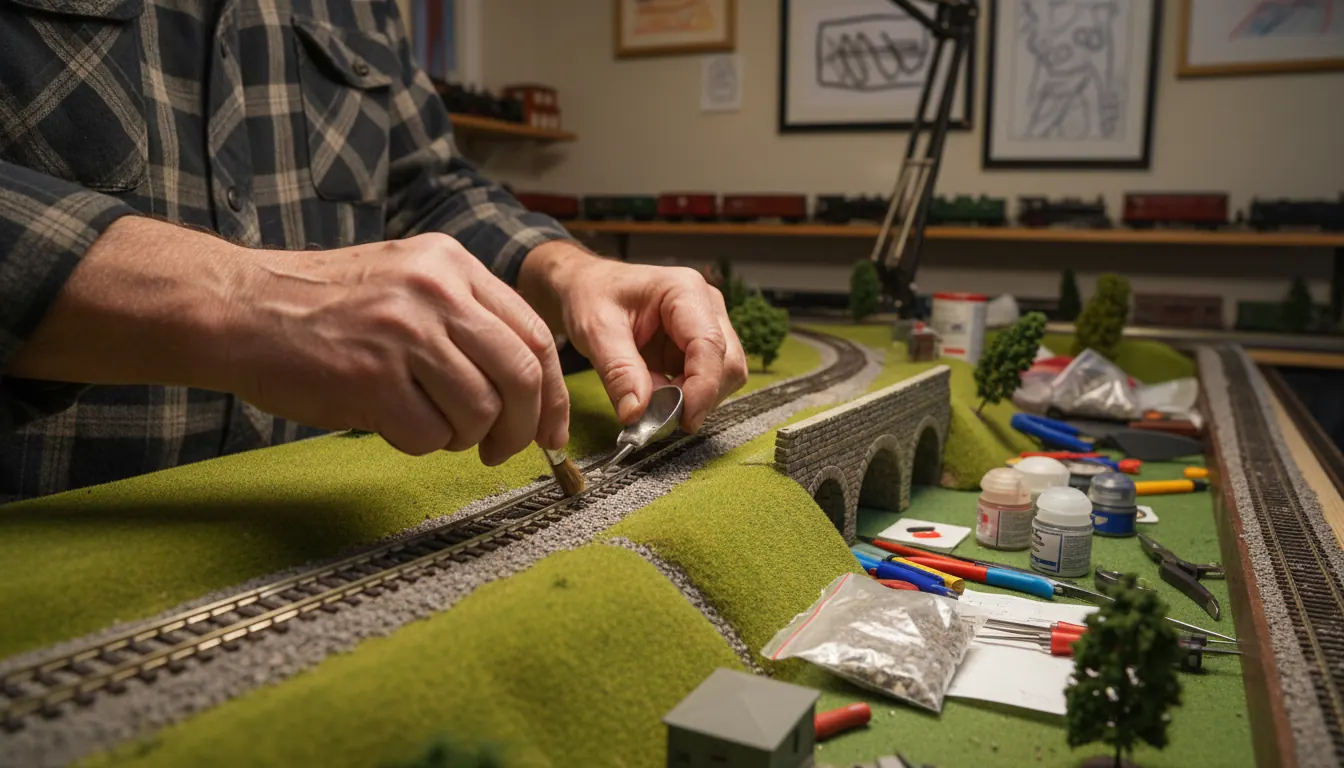
- Basics of scenery, like how to use foam or plaster to shape features, lay down ground cover, and plant lifelike plants.
- Methods for building tracks, such as using the right ballast, securing the trackwork, and making sure there are no problems with the electricity throughout.
- Weathering methods that give buildings and equipment a realistic worn look, turning toys into models that look real.
- Operations ideas, like how to route trains, how to switch them, and how to make realistic schedules or systems for moving cars.
- Maintenance skills are needed to keep trains running easily, clean the track and wheels, and fix common mechanical problems.
How Model Railroaders Build Realistic Layouts
To make realistic tiny settings, you need to pay attention to many levels of detail that work together. Layouts that work well match how they look with how well they work, so trains always run and the scenery tells interesting stories. The building process usually goes through several stages, including building the track, installing the scenery, setting up the electricity system, and finishing off the details with cars and structures.
Benchwork is the base of the structure. It is usually made from dimensional lumber or special frame methods. Using joists and cross-members in open-grid construction makes the building strong while keeping it light and letting you get to the wires underneath. L-girder systems give you the most options for making setups with multiple levels and different heights, but they are harder to build correctly and require more advanced building skills.
| Technique | Materials | Skill Level | Effect Achieved |
|---|---|---|---|
| Foam Carving | Hot wire tool for extruded styrofoam | Beginner | Rock walls and shapes of the terrain |
| Plaster Shells | Towels, hydrocal, and screens | Intermediate | Lightweight mountains on top of a foam base |
| Static Grass Application | Fiber grass and an electrostatic brush | Intermediate | Realistic pattern of straight grass |
| Water Simulation | Products made of resin, medium gloss | Advanced | Rivers, lakes, and marshes that look realistic |
| Forced Perspective | Scenery scale with steps | Advanced | An illusion of more space and depth |
"The difference between a toy train layout and a convincing model railroad lies in the subtle details—selectively compressed structures, weathered equipment, and scenery that tells a story about the place and time being modeled."
Weathering turns models that are brand new into accurate images of real tools in use. Rail cars get dirty, rust, and wear in different ways depending on where they are used, when they were made, and how they were maintained. There are many ways to add weathering, from simple paints and dry brushing to advanced airbrushing and special weathering powders. The key is to look at pictures of prototypes to figure out where and how natural wear and tear happens, then add effects only where they match the patterns you saw.
Why Model Railroader Magazines Inspire the Community
Both printed and internet publications play many roles in the world of model railroading. They teach, bring people together, and promote the sport all at the same time. These tools keep historical information alive that might be lost as older modelers leave the hobby because they show how techniques change over time and introduce new goods. The visual structure of the medium is especially useful because pictures and diagrams show complicated links between spaces and finishing techniques better than words alone.
Reading magazines on a regular basis introduces modeling enthusiasts to a wide range of ideas and methods. Some modelers put a lot of emphasis on prototypical accuracy, studying specific trains and time periods in great detail to make sure every detail fits what is known from history. Others like working alone and making up trains that are based on real ones but aren't exactly like the ones that existed in real life. Both methods are shown in publications, which supports different paths and helps readers find what interests them.
| Type of Content | Purpose | Frequency | Typical Audience Level |
|---|---|---|---|
| Layout Tours | Show off finished work and inspire readers | Monthly features | All levels |
| Technique Articles | Step-by-step instructions on specific skills | Every issue | Beginners to Experts |
| Product Reviews | Evaluate the newest tools and releases | Ongoing coverage | All levels |
| Historical Features | Document prototype trains and time periods | Quarterly deep dives | Intermediate to Advanced |
"A good model railroad magazine doesn't just show finished layouts—it reveals the thinking process behind design decisions and teaches readers how to apply those principles to their own projects."
Many times, feature pieces talk about well-known modelers and their layouts, showing the human stories and reasons behind big projects. These stories give the hobby a human face and show that great results come from hard work rather than natural ability. Beginners are more likely to stick with something when they see others successfully handle problems and gain new skills over time.
How Railroading Media Have Evolved
The way that model railroader magazines are distributed has changed with the times, but they have kept their main teaching goal. People who like real collections and reading away from screens are still interested in traditional print versions. Digital versions have benefits like video material, interactive track plans, and being available right away all over the world. A lot of publications now use hybrid models, which means they put out print issues and also have strong websites with extra material like forums, video tutorials, and tools that can be downloaded.
Instead of replacing established publications, social media and video sites add to them. Short-form material on sites like YouTube shows quick examples of techniques, while longer magazine pieces go into more detail and cover more ground. This mix makes sure that fans can get information in ways that work for them and their schedules. Through multiple channels, this method improves community ties by giving modelers more ways to connect with each other and find new ideas.
Frequently Asked Questions
What is model railroading and how do I get started?
Model railroading is the hobby of creating miniature versions of real railroad systems with tracks, buildings, scenery, and trains. To get started, choose a scale that fits your space and budget (HO scale at 1:87 or N scale at 1:160 are popular for beginners), invest in a starter set or individual components, and learn basic skills like track laying, wiring, and scenery construction.
What scale should beginners choose for model railroading?
HO scale (1:87) and N scale (1:160) are the most popular choices for beginners because they offer a good balance of detail and space requirements. HO scale provides easier handling and more available products, while N scale allows for more complex layouts in smaller spaces. Consider your available room, budget, and vision for your layout when making your choice.
How much space do I need for a model railroad layout?
Space requirements vary by scale and layout complexity. A basic HO scale layout can fit on a 4x8 foot table, while N scale layouts can work in even smaller spaces. Larger scales like O gauge require more room. Modular and portable layouts offer flexibility for those with limited permanent space, and can be set up and taken down as needed.
What is the difference between DC and DCC control systems?
DC (Direct Current) is the traditional control system where track voltage controls train speed, with only one train running per electrical block. DCC (Digital Command Control) allows multiple trains to run independently on the same track by placing decoders inside locomotives, enabling precise control of speed, direction, lighting, and sound effects for each train separately.
How can model railroader magazines help me improve my skills?
Model railroader magazines provide step-by-step tutorials, product reviews, layout tours, and technique demonstrations that break down complex skills into manageable steps. They showcase different modeling approaches from prototype accuracy to freelanced designs, introduce new products and technologies, and connect you with the broader modeling community through shared projects and inspiration.