
The Hobby of Model Railroading in a Digital Entertainment World
There's something quietly compelling about watching a miniature locomotive ease through a hand-built mountain pass. The hobby of model railroading has been part of living rooms, basements, and community halls for generations — long before screens became the default form of entertainment. Today, as people spend their leisure time across video games, streaming services, and online platforms like spinwinera casino, it's worth asking what place a hands-on, slow-burn hobby like model railroading holds in a world that rarely slows down.
The Hobby of Model Railroading: Tradition Meets Digital Culture
Model railroading didn't arrive from nowhere. It grew out of a genuine fascination with the railroad — an industry that shaped nations, moved goods, and connected distant communities in ways that felt almost magical at the time. Early hobbyists weren't just playing with toys; they were preserving something cultural, recreating the sounds and movements of machines that defined an era. That origin still resonates. Many of today's enthusiasts feel a direct line between their layouts and a broader industrial history that digital entertainment rarely touches.
How the Hobby Found Its Modern Identity
Over the decades, the hobby of model railroading absorbed new technologies without abandoning its core appeal. DCC systems, LED lighting, laser-cut structures, and 3D-printed details all entered layouts that still run on physical track over physical terrain. The result is a hobby that looks traditional from a distance but is quietly technical at its core. A hobbyist today might spend an evening researching prototype railroad operations from the 1950s, then apply that research using software-assisted layout design tools — a combination that would have seemed extraordinary thirty years ago.
What the Hobby Asks of the People Who Take It Up
Model railroading is not a passive pursuit. It asks for patience, curiosity, and a tolerance for problems that don't resolve quickly. In that sense, it selects for a particular kind of person. The skills and habits it cultivates are broad and genuinely useful well beyond the workbench.
- Spatial planning and layout design across multiple dimensions
- Basic electrical wiring and circuit troubleshooting
- Scenic construction using foam, plaster, and natural materials
- Research into real railroads, eras, and geographic regions
- Budget management across months or years of gradual investment
- Mechanical problem-solving with small-scale components
- Community engagement through clubs, forums, and exhibitions
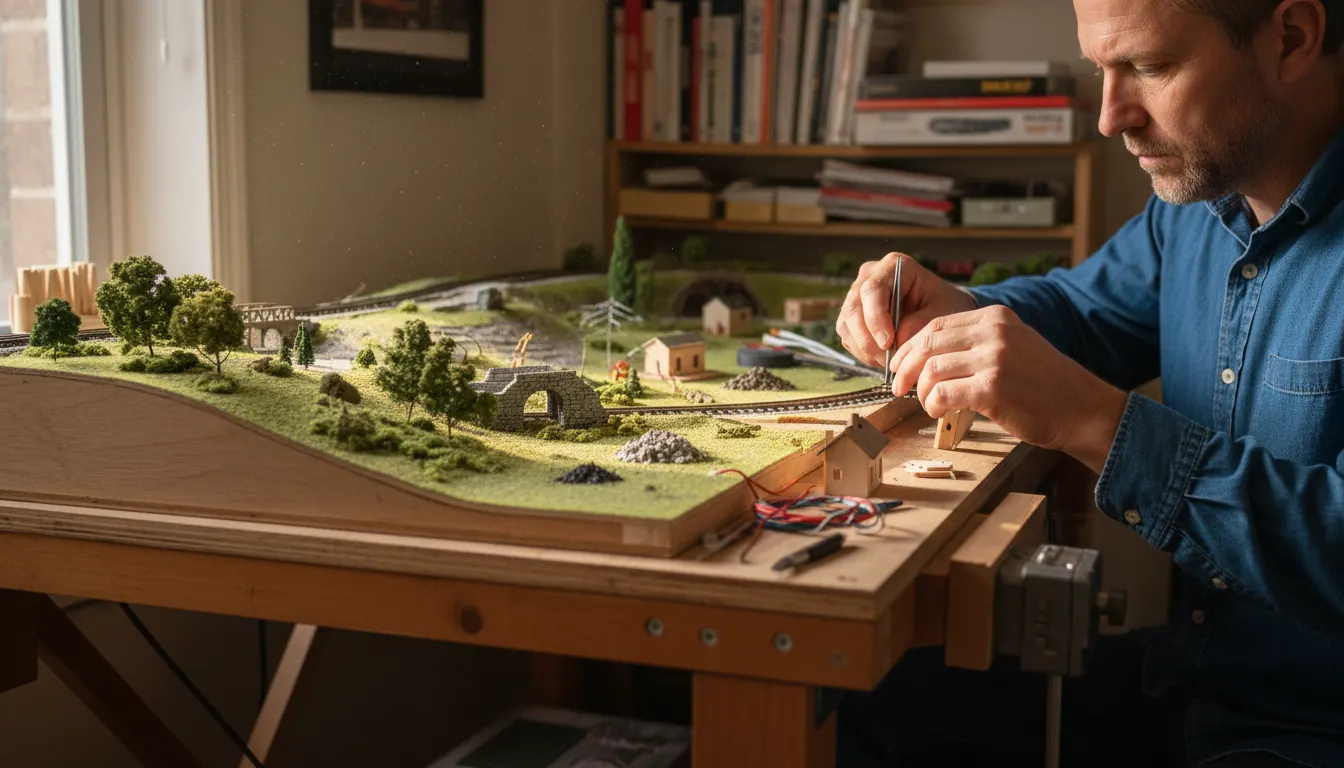
Is Model Railroading a Dying Hobby or a Niche Passion
The question surfaces often enough to take seriously. Is model railroading a dying hobby, or does it just look that way from the outside? Attendance at some regional train shows has dipped. Certain long-running hobby shops have closed. The average age of active club members skews older than many hobby communities would like. None of this is invented, and the people who care about the hobby's future aren't pretending otherwise.
A Look at Where the Hobby Stands
| Indicator | Concern | Counterpoint |
|---|---|---|
| Club membership age | Average age rising in many clubs | Younger members joining through YouTube and online forums |
| Hobby shop closures | Brick-and-mortar stores declining | Online retail and direct-from-manufacturer sales growing |
| Manufacturer activity | Some smaller brands have folded | Major brands investing in new DCC and sound technology |
| Online community size | Forums saw decline in 2010s | Reddit, Facebook groups, and YouTube channels expanding |
| Youth participation | School-age engagement harder to measure | STEM-focused clubs and maker spaces introducing the hobby |
The picture is genuinely mixed. Decline in one area often coincides with growth in another, which suggests the hobby is reshaping itself rather than disappearing.
"Model railroading isn't dying — it's migrating. The community has moved partly online, and that's not a retreat. It's an adaptation."
— John Armstrong, layout designer and author of Track Planning for Realistic Operation
The Modern Model Railroader: Skills Shared with Gamers
It's become a familiar observation among hobbyists: people who enjoy strategy games and simulation titles often take to model railroading with unexpected ease. The overlap isn't coincidental. Both pursuits reward sustained attention, iterative problem-solving, and the pleasure of watching a complex system behave the way you intended. A model railroader debugging a wiring fault is doing something structurally similar to a gamer optimizing a base layout or managing resource chains across a campaign map.
The Thinking That Connects Both Worlds
What makes this comparison useful isn't that the hobbies are identical — they clearly aren't. One involves physical materials, spatial reasoning, and a layout you can walk around. The other unfolds on a screen. But the mental posture they cultivate is genuinely similar: an appetite for systems, a willingness to learn by doing, and a comfort with slow, incremental progress toward a goal that's always slightly out of reach. Many model railroaders describe their hobby in exactly the terms a dedicated gamer might use to explain why they keep returning to a particular title.
Habits the Two Communities Share
- Setting long-term goals and breaking them into manageable stages
- Building detailed knowledge in a specific area through sustained research
- Engaging with online communities to solve problems and share progress
- Returning to a project after setbacks without abandoning it entirely
- Finding satisfaction in the process rather than only in the finished result
- Investing in tools and materials that improve the quality of the experience
- Explaining a complex personal interest to people who don't immediately understand it
From Railroader to Digital Enthusiast: How Technology Shapes the Experience
The relationship between model railroading and technology has never been straightforward. Some enthusiasts resist change instinctively, preferring layouts that feel authentic to a specific era even in their construction methods. Others have embraced every new tool available, from computer-aided track planning software to smartphone-controlled locomotive systems. Both approaches coexist within the same hobby, which gives the community an unusual breadth — traditionalists and early adopters often share the same club meeting.
Technologies That Have Changed the Hobby
| Technology | What It Changed | Who Uses It Most |
|---|---|---|
| DCC (Digital Command Control) | Multiple independent locomotive control | Intermediate to advanced modelers |
| 3D printing | Custom structures, figures, and parts | Technically confident enthusiasts |
| Layout design software | Track planning and scenery visualization | Beginners and experienced planners alike |
| LED lighting | Affordable, realistic interior and exterior lighting | Broadly adopted across skill levels |
| YouTube and online video | Self-directed learning and technique discovery | New and returning hobbyists |
"The tools change, but the goal stays the same: a world in miniature that behaves as if it's real. Technology just makes that goal more achievable."
— Tony Koester, contributing editor, Model Railroader magazine
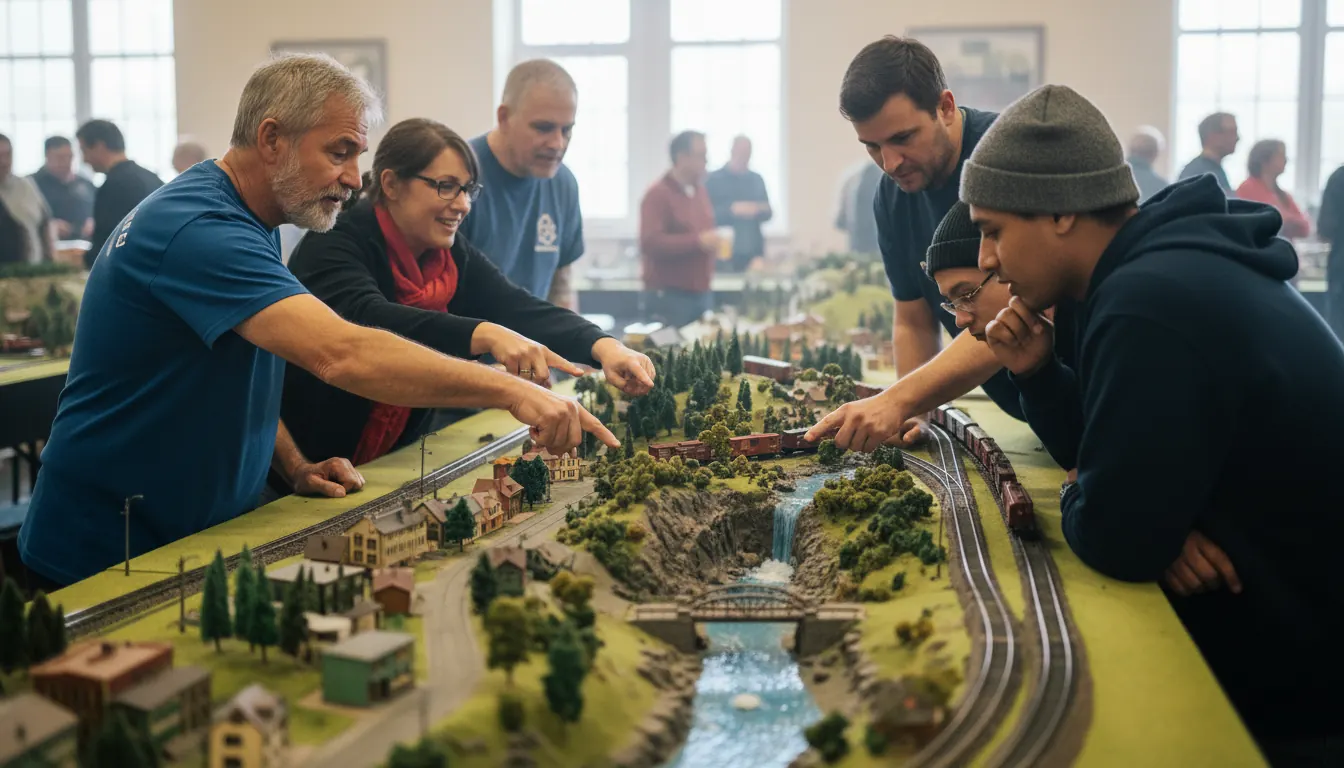
Why the Model Railroading Hobby Continues to Evolve
Hobbies that survive long enough tend to do so because they offer something that trendier alternatives don't. Model railroading offers physicality — the particular satisfaction of holding a finished structure you built yourself, or hearing a locomotive negotiate a grade you spent two weekends getting right. That tangible quality is not easily replicated, and in an era increasingly defined by intangible digital experiences, it may be more appealing than ever to a certain kind of person.
The community around model railroading has also proved more adaptable than its critics expected. Online tutorials have replaced the need for a local mentor. International forums have connected modelers who would never have met through regional clubs. Younger enthusiasts have arrived through model railroad video games, historical documentaries, and a broader resurgence of interest in slow, deliberate crafts. The railroader of today might be any age, working in any scale, modeling any era — a range of expression that the hobby has earned through decades of incremental evolution.
The model railroading hobby has never needed to compete with digital entertainment — it occupies a different space in the lives of the people who pursue it. Whether you're a longtime railroader returning to a layout after years away, or someone discovering the hobby for the first time, the appeal remains consistent: a world you build yourself, at your own pace, that runs exactly the way you planned.